Navigating 2026 FAFSA Changes: Essential Updates for Financial Aid Eligibility
Anúncios
The Free Application for Federal Student Aid (FAFSA) is undergoing significant transformations, and the 2026 FAFSA cycle promises to bring some of the most impactful changes yet. These updates are designed to simplify the application process, expand eligibility for federal student aid, and provide a more equitable distribution of financial support. However, understanding these new rules and how they might affect your family’s financial aid eligibility is crucial for effective college planning. This comprehensive guide will delve into the key updates for the 2026 FAFSA changes, helping students and parents prepare for what’s ahead and maximize their chances of securing the necessary funding for higher education.
Anúncios
Understanding the Evolution of FAFSA: Why 2026 Matters
The FAFSA has been a cornerstone of federal student aid for decades, but its complexity has often been a barrier for many families. Recent legislative efforts, particularly the FAFSA Simplification Act, aim to streamline the application and make aid more accessible. The 2026 FAFSA changes are a continuation of these reforms, building upon the foundational shifts introduced in earlier cycles. For instance, the Expected Family Contribution (EFC) has been replaced by the Student Aid Index (SAI), a new metric designed to better reflect a family’s ability to pay for college. These ongoing adjustments mean that families can’t rely on past experiences when planning for future financial aid; staying informed about the latest modifications is paramount.
The importance of the 2026 FAFSA changes cannot be overstated. They will influence everything from how much federal Pell Grant money a student receives to their eligibility for federal loans and work-study programs. Missing key updates could lead to missed opportunities for aid, making thorough preparation essential. Our goal here is to break down these complex changes into understandable components, offering practical advice and strategies to navigate the new landscape successfully. Whether you are a high school student dreaming of college or a parent planning for your child’s future, grasping these changes now will put you in a stronger position.
Key Update 1: The Refined Student Aid Index (SAI) Calculation
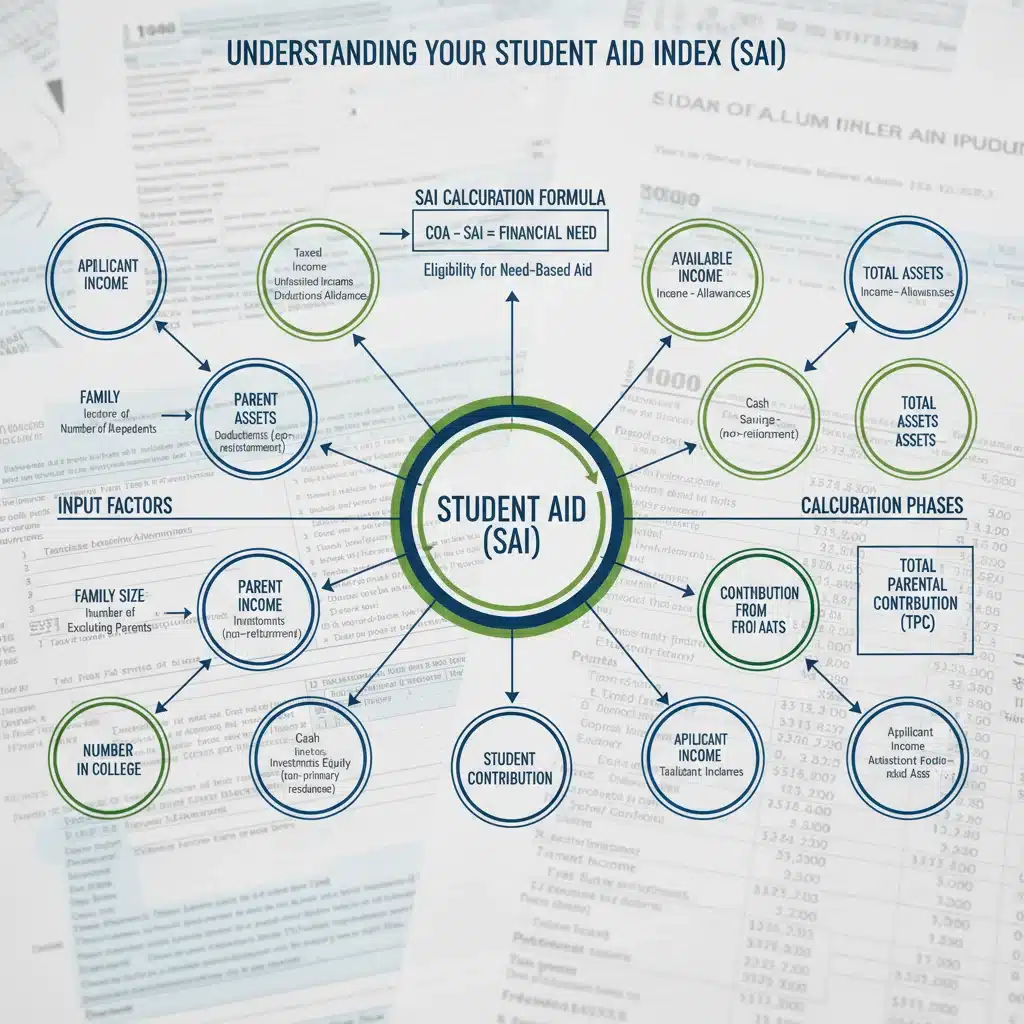
One of the most significant aspects of the 2026 FAFSA changes revolves around the Student Aid Index (SAI). While the SAI was introduced in prior cycles, the 2026 FAFSA will see further refinements to its calculation methodology. The SAI is not a dollar amount that families are expected to pay, but rather an eligibility index used by financial aid administrators to determine how much federal student aid a student is eligible for. A lower SAI generally indicates a greater financial need and, consequently, eligibility for more aid.
Anúncios
Previously, the EFC calculation was criticized for its opacity and sometimes for not accurately reflecting a family’s true financial situation. The SAI aims to be more transparent and equitable. For the 2026 FAFSA, expect adjustments in how certain income and asset components are weighted. For example, changes might include an increased allowance for certain expenses or a different treatment of small business assets. It’s vital for families to understand that every dollar reported on the FAFSA contributes to this calculation, and even minor discrepancies can impact the final SAI. The goal is to provide a more holistic view of a family’s financial capacity, moving away from a one-size-fits-all approach.
Families should pay close attention to how untaxed income and assets are reported, as these can significantly influence the SAI. While specific percentage shifts for the 2026 cycle are still being finalized, the general trend is towards a more nuanced assessment. This means that families who might have been overlooked for aid under the old EFC system could find themselves eligible under the refined SAI. Conversely, some families who previously qualified for substantial aid might see their eligibility adjusted. Proactive financial planning, understanding what counts as an asset, and knowing how to accurately report income will be crucial.
Key Update 2: Expanded Pell Grant Eligibility and Simplified Determination
The Pell Grant program is a cornerstone of federal financial aid, providing need-based grants to low-income undergraduate students. The 2026 FAFSA changes are expected to further expand Pell Grant eligibility, making it accessible to more students. This expansion is a direct result of the FAFSA Simplification Act, which aims to tie Pell Grant eligibility more closely to a student’s and their family’s income relative to the federal poverty level. This approach is designed to be more intuitive and to ensure that students with the greatest financial need receive the support they require.
Under the new methodology, some students will automatically qualify for the maximum Pell Grant based solely on their family’s adjusted gross income (AGI) and family size, without needing a full SAI calculation. Other students will have their Pell Grant eligibility determined by the SAI, but with a more generous scale. This means that even students with a positive SAI might still qualify for a partial Pell Grant, a significant departure from previous rules where a higher EFC often meant no Pell Grant at all. This is a major win for many families, as Pell Grants do not need to be repaid, reducing the overall cost of education.
For families, this means that even if you previously thought you wouldn’t qualify for a Pell Grant, it’s worth reapplying and understanding the new criteria. The expanded eligibility could significantly reduce the financial burden of college. It’s also important to note that the maximum Pell Grant amount is subject to annual adjustments by Congress, but the underlying eligibility framework from the 2026 FAFSA changes is designed to be more inclusive. Students should actively monitor the Department of Education’s announcements regarding specific income thresholds and maximum award amounts for the upcoming academic year.
Key Update 3: Changes to Family Size Definition and Dependent Status
The definition of family size and dependent status on the FAFSA has historically been a source of confusion and sometimes disadvantage for families with complex structures. The 2026 FAFSA changes aim to clarify and potentially simplify these definitions, aligning them more closely with tax household information. This shift is intended to reduce errors and make the application process more straightforward for many families.
Under previous FAFSA versions, the number of family members in college was a significant factor in the EFC calculation, often leading to a lower EFC for families with multiple children enrolled simultaneously. However, with the introduction of the SAI, this specific benefit has been eliminated. The new calculation focuses more on the total family size and income, rather than dividing the parental contribution by the number of college students. This change can have a substantial impact on families with multiple children pursuing higher education concurrently, potentially leading to a higher SAI for each student.
Families should carefully review how their tax household information translates to the FAFSA’s definition of family size. While the goal is simplification, nuances can still exist, especially in cases of divorce, separation, or blended families. It’s crucial to accurately report who provides more than 50% of financial support, as this determines which parent’s information is included on the FAFSA. Understanding these intricate details within the 2026 FAFSA changes is vital, as an incorrect reporting of family size or dependent status can significantly alter financial aid eligibility. Consulting with a financial aid advisor or using the FAFSA’s help resources can be beneficial if your family structure is complex.
Key Update 4: Streamlined Application Process and Data Retrieval
One of the most anticipated aspects of the 2026 FAFSA changes is the continued effort to streamline the application process itself. The Department of Education is committed to making the FAFSA easier to complete, reducing the time and effort required from students and families. This includes a more user-friendly online interface, clearer instructions, and enhanced data retrieval options.
The IRS Direct Data Exchange (DDX), formerly known as the IRS Data Retrieval Tool (DRT), is at the forefront of this simplification. For the 2026 FAFSA, the DDX will become mandatory for most applicants. This means that students and contributors (parents or spouses, if applicable) will be required to provide consent for the IRS to directly share their tax information with the Department of Education. This direct transfer of data aims to significantly reduce the need for manual data entry, minimize errors, and make the application process much faster. It also eliminates the need for families to upload tax documents in many cases, simplifying verification processes.
While mandatory consent for DDX might raise privacy concerns for some, it’s designed to enhance security and accuracy. Families should be prepared to provide this consent when filling out the 2026 FAFSA. This streamlining also extends to the number of questions on the application, which has been significantly reduced in recent cycles and will continue to be optimized. The overall goal of these 2026 FAFSA changes is to remove barriers to applying for financial aid, ensuring that more eligible students complete the form and access the funds they need for college.
Key Update 5: Impact on Specific Financial Aid Programs and Considerations
Beyond Pell Grants and the general SAI calculation, the 2026 FAFSA changes will also have ripple effects on other federal financial aid programs and specific considerations for certain student populations. Understanding these broader implications is essential for a complete financial aid strategy.
Federal Student Loans
While the eligibility criteria for federal student loans (Stafford Loans, PLUS Loans) are largely tied to enrollment status and general financial need, the SAI calculation will indirectly influence these. A lower SAI might open doors to more subsidized loan eligibility, where the government pays the interest while the student is in school. Families should remember that federal loans often come with more favorable terms than private loans, making understanding eligibility crucial.
Federal Work-Study Program
The Federal Work-Study Program provides part-time jobs for undergraduate and graduate students with financial need, allowing them to earn money to help pay for educational expenses. Eligibility for this program is also based on the FAFSA and the calculated SAI. As with other need-based aid, the refined SAI calculation under the 2026 FAFSA changes could affect who qualifies for work-study opportunities. Students interested in this program should complete the FAFSA promptly, as funds are often limited and awarded on a first-come, first-served basis.
Special Circumstances and Professional Judgment
One critical aspect that remains consistent, but becomes even more important with significant changes, is the concept of ‘special circumstances.’ If a family experiences a significant change in financial situation after filing the FAFSA (e.g., job loss, medical expenses, divorce, death of a parent), they can appeal to the college’s financial aid office for a re-evaluation. This process, known as ‘professional judgment,’ allows financial aid administrators to adjust the SAI based on unique circumstances not captured by the FAFSA. The 2026 FAFSA changes, while aiming for broader accuracy, cannot account for every individual situation, making professional judgment a vital safety net for many families.
It’s important to understand that each college has its own process for handling special circumstances, and documentation will always be required. Families should not hesitate to reach out to the financial aid office if their current financial situation does not accurately reflect the income and asset information reported on the FAFSA due to unforeseen events. Proactive communication is key in these situations.

Preparing for the 2026 FAFSA: A Proactive Approach
Given the scope of the 2026 FAFSA changes, proactive preparation is not just recommended, it’s essential. Here are actionable steps families can take now to ensure a smooth application process and maximize financial aid eligibility:
- Stay Informed: Regularly check the Federal Student Aid website (studentaid.gov) for the latest updates and announcements regarding the 2026 FAFSA. Information will be released periodically, and staying current will prevent surprises.
- Gather Documents Early: Even with streamlined data retrieval, having your financial documents organized is crucial. This includes tax returns (from the ‘prior-prior year’ – for 2026-2027 FAFSA, this means 2024 tax information), W-2 forms, bank statements, and investment records. While the IRS DDX will pull tax data, having your own records can help with verification and understanding.
- Understand the SAI: Familiarize yourself with how the Student Aid Index is calculated. While the exact formula may have minor tweaks, understanding the general principles (income, assets, family size) will help you anticipate your potential eligibility.
- Consider Asset Protection: If you have significant assets, understand how they are treated in the SAI calculation. Some assets, like funds in qualified retirement accounts, are typically excluded. Consult with a financial advisor if you have complex asset portfolios to ensure you’re making informed decisions that align with financial aid strategies.
- Communicate with Colleges: If you have specific concerns or believe your financial situation warrants special consideration, reach out to the financial aid offices of the colleges you are interested in. They are your best resource for understanding how the 2026 FAFSA changes will impact aid at their specific institution.
- File Early: The FAFSA typically opens on October 1st (though this has shifted in recent years, so confirm the 2026 opening date). Filing as soon as possible is always advisable, as some financial aid, particularly institutional grants and federal work-study funds, are often awarded on a first-come, first-served basis.
- Create an FSA ID: Both the student and one parent (if the student is dependent) will need an FSA ID to access and sign the FAFSA. If you don’t have one, create it well in advance, as the process can take a few days to verify.
The Broader Impact of FAFSA Simplification on Higher Education
The 2026 FAFSA changes are not just about individual applications; they represent a broader shift in how federal student aid is conceptualized and delivered. The overarching goal of the FAFSA Simplification Act, which underpins these changes, is to make higher education more accessible and affordable for a wider range of students, particularly those from low-income backgrounds. By simplifying the application and expanding Pell Grant eligibility, the Department of Education hopes to reduce the number of students who are deterred from applying for aid due to complexity or perceived ineligibility.
This could lead to an increase in college enrollment, especially among historically underserved populations. It also places a greater emphasis on colleges to adapt their institutional aid policies to align with the new federal framework. While the changes aim for greater equity, they also require students and families to be more diligent in understanding the new rules. The transition period for any major systemic change can present challenges, but the long-term benefits are expected to outweigh these initial hurdles.
Ultimately, the 2026 FAFSA changes underscore a commitment to ensuring that financial barriers do not prevent deserving students from pursuing their educational aspirations. By providing clearer pathways to financial assistance, the government aims to strengthen the talent pipeline and contribute to a more educated workforce. For families, this translates into a renewed opportunity to plan for college with greater clarity and potentially more robust support.
Conclusion: Navigating the Future of Financial Aid
The 2026 FAFSA changes mark another significant milestone in the ongoing effort to simplify federal student aid and make college more affordable. From the refined Student Aid Index and expanded Pell Grant eligibility to a streamlined application process and mandatory IRS Direct Data Exchange, these updates will reshape how millions of students access financial assistance. While the changes are designed to be beneficial, they require careful attention and proactive planning from students and families.
By staying informed, gathering necessary documents, understanding the new calculation methodologies, and communicating effectively with financial aid offices, you can confidently navigate the upcoming FAFSA cycle. Remember that federal financial aid is a critical resource, and understanding these changes is your best strategy for maximizing your eligibility and making your college dreams a reality. The future of financial aid is evolving, and with the right preparation, you can ensure you are well-positioned to benefit from these important reforms.