US Renewable Energy Investments Surge 15% by 2026: An In-Depth Analysis
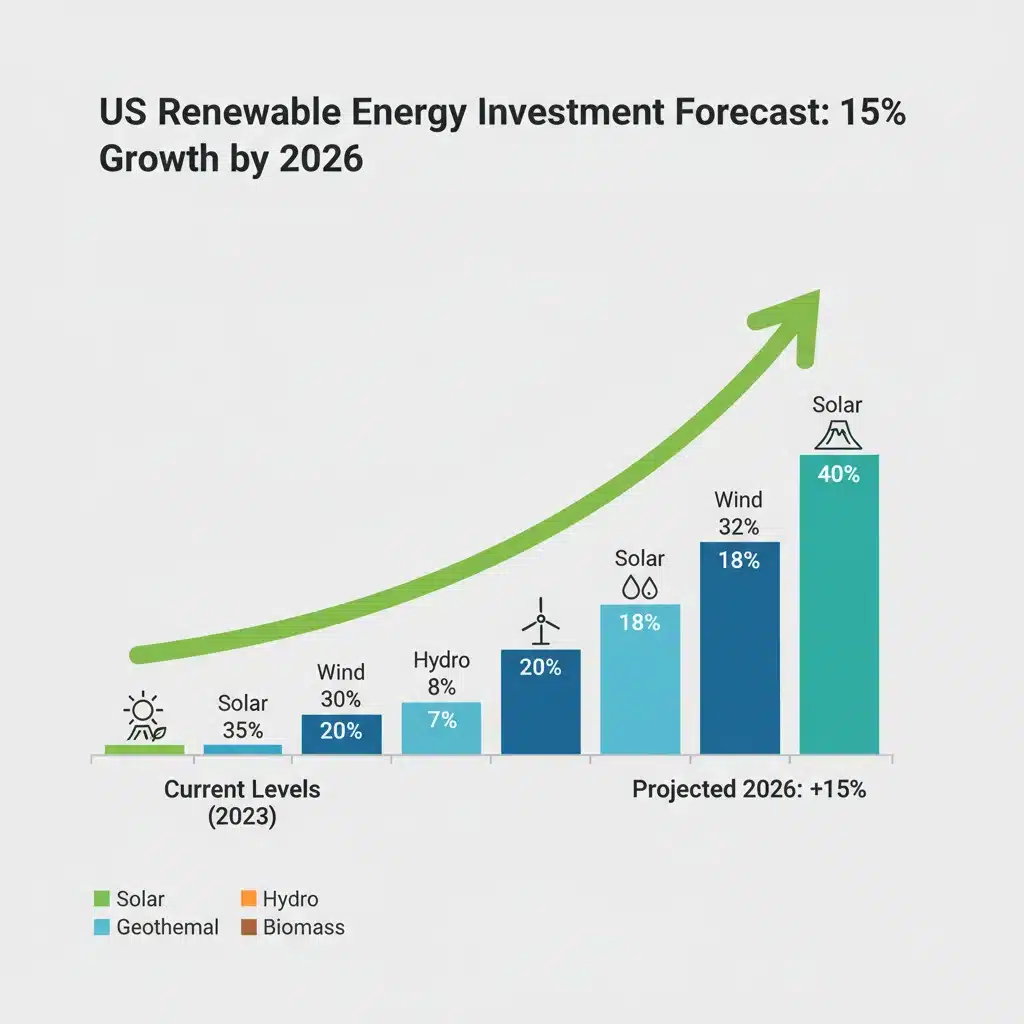
The landscape of energy production in the United States is undergoing a monumental transformation. A recent analysis projects a significant 15% increase in US renewable energy investments by 2026, signaling a robust and accelerating shift towards sustainable power sources. This isn’t merely a statistical uptick; it represents a profound realignment of national priorities, economic strategies, and environmental commitments. This investigative piece delves deep into the factors propelling this unprecedented growth, explores its multifaceted impacts, and offers a glimpse into the future of America’s energy independence and environmental stewardship.
Anúncios
The Driving Forces Behind the 15% Surge in US Renewable Investments
Several convergent forces are contributing to this remarkable surge in US renewable investments. Understanding these drivers is crucial to appreciating the sustainability and potential longevity of this trend. From supportive governmental policies to technological advancements and evolving market dynamics, the ecosystem for renewable energy is more fertile than ever before.
Policy Frameworks and Government Incentives
One of the primary catalysts for the increase in US renewable investments is a suite of supportive government policies and incentives. The current administration has prioritized climate action and clean energy development, translating into substantial legislative backing. Tax credits, such as the Investment Tax Credit (ITC) for solar and the Production Tax Credit (PTC) for wind, have been instrumental in making renewable projects more financially viable. These incentives reduce the upfront costs and improve the return on investment for developers, attracting both domestic and international capital. Furthermore, state-level renewable portfolio standards (RPS) mandate that a certain percentage of electricity come from renewable sources, creating a guaranteed market for green energy and fostering consistent demand for US renewable investments.
Anúncios
Beyond direct financial incentives, regulatory streamlining and investments in grid modernization are also playing a critical role. Efforts to expedite permitting processes for large-scale renewable projects and upgrade existing electrical grids to accommodate intermittent renewable generation are lowering barriers to entry and increasing efficiency. This comprehensive policy approach provides a stable and predictable environment for investors, encouraging long-term commitments to US renewable investments.
Technological Advancements and Cost Reductions
The relentless pace of technological innovation has dramatically altered the economic calculus of renewable energy. Over the past decade, the cost of generating electricity from solar photovoltaics and wind turbines has plummeted. Solar panel efficiency continues to improve, and manufacturing processes have become more cost-effective. Similarly, wind turbine technology has advanced, with larger, more efficient turbines capable of capturing more energy even in lower wind speeds. These technological breakthroughs have made renewable energy sources increasingly competitive with, and often cheaper than, traditional fossil fuels, even without subsidies. This fundamental shift in cost parity is a powerful magnet for US renewable investments.
Moreover, advancements in energy storage solutions, particularly battery technology, are addressing one of the historical challenges of renewable energy: intermittency. Improved battery capacity and reduced costs mean that renewable energy can be stored and dispatched when needed, enhancing grid stability and reliability. This integration of storage further bolsters the attractiveness of US renewable investments by making these projects more robust and dispatchable, thereby increasing their value proposition to utilities and consumers alike.
Growing Corporate and Consumer Demand for Sustainability
The demand side of the equation is equally compelling. A growing number of corporations are committing to ambitious sustainability goals, often pledging to power their operations entirely with renewable energy. This corporate procurement of green power, frequently through Power Purchase Agreements (PPAs), provides a stable revenue stream for renewable energy projects and drives significant US renewable investments. Consumers, too, are increasingly conscious of their environmental footprint and are demanding cleaner energy options. This rising public awareness and preference for sustainable products and services create a strong market signal that encourages further investment in renewable infrastructure.
Environmental, Social, and Governance (ESG) investing principles are also gaining widespread traction in the financial sector. Investors are increasingly evaluating companies based on their sustainability performance, leading to a reallocation of capital towards businesses and projects that align with ESG criteria. This shift in investment philosophy is channeling substantial funds into US renewable investments, as both institutional and individual investors seek to support a greener economy and achieve long-term, sustainable returns.
Economic Impacts of Increased US Renewable Investments
The projected 15% increase in US renewable investments is not just an environmental triumph; it is a significant economic boon. This surge is creating new jobs, stimulating local economies, and fostering innovation across various sectors.
Job Creation and Economic Growth
The renewable energy sector is a prolific job creator. Investments in solar, wind, geothermal, and other clean energy technologies translate directly into demand for engineers, technicians, construction workers, manufacturing employees, and project managers. These jobs are often high-paying and localized, providing economic stability to communities across the nation. Unlike traditional fossil fuel industries, which can be concentrated in specific regions, renewable energy projects can be developed in diverse geographical areas, distributing economic benefits more broadly.
Furthermore, the growth of the renewable energy supply chain – from component manufacturing to installation and maintenance – generates secondary economic activity, creating a ripple effect throughout the economy. This economic stimulus is particularly vital in rural areas where large-scale wind and solar farms are often developed, providing new revenue streams for landowners and local governments through taxes and lease payments. The increase in US renewable investments is thus a powerful engine for economic growth and diversification.
Energy Independence and Price Stability
Reducing reliance on imported fossil fuels is a critical aspect of national security and economic stability. The expansion of domestic renewable energy production through increased US renewable investments strengthens energy independence, insulating the nation from volatile global energy markets and geopolitical uncertainties. By harnessing indigenous resources like sunlight, wind, and geothermal heat, the U.S. can produce a greater share of its own energy, enhancing its strategic position on the global stage.
Moreover, renewable energy sources typically have stable and predictable operating costs once installed, as they do not depend on fuel prices. This stability translates into more predictable electricity prices for consumers and businesses, shielding them from the fluctuations inherent in fossil fuel markets. This long-term price stability is a significant advantage, fostering a more resilient and secure energy future for the United States.
Environmental and Social Implications of the Shift
Beyond the economic benefits, the increased US renewable investments carry profound environmental and social implications, contributing significantly to climate change mitigation and public health improvements.
Climate Change Mitigation and Air Quality Improvement
The most direct environmental benefit of increased US renewable investments is the reduction of greenhouse gas emissions. By displacing fossil fuel-fired power plants, renewable energy sources prevent millions of tons of carbon dioxide and other pollutants from entering the atmosphere. This is crucial for meeting climate targets and mitigating the worst impacts of global warming, such as extreme weather events, sea-level rise, and ecosystem disruption.
In addition to greenhouse gases, traditional power generation also releases harmful air pollutants like sulfur dioxide, nitrogen oxides, and particulate matter, which contribute to respiratory illnesses, heart disease, and premature deaths. The transition to renewable energy significantly improves air quality, leading to tangible public health benefits and reducing healthcare costs. This cleaner air is a direct dividend of robust US renewable investments.
Enhanced Energy Access and Equity
The distributed nature of many renewable energy technologies, particularly solar, offers opportunities to enhance energy access and equity. Microgrids and community solar projects can bring reliable and affordable electricity to underserved rural communities and urban areas that have historically faced energy insecurity. This localized energy production empowers communities, reduces transmission losses, and can lower energy bills for low-income households.
Furthermore, the development of renewable energy projects often involves community engagement and benefit-sharing mechanisms, ensuring that local populations have a voice in project development and receive direct economic advantages. This focus on equitable distribution of benefits is a vital component of sustainable development, driven by forward-thinking US renewable investments.
Challenges and Opportunities Ahead for US Renewable Investments
While the outlook for US renewable investments is overwhelmingly positive, the path forward is not without its challenges. Addressing these hurdles will be crucial to sustaining the momentum and maximizing the benefits of this energy transition.
Grid Modernization and Intermittency Management
Integrating a rapidly increasing share of intermittent renewable energy (like solar and wind) into an aging electrical grid presents significant technical challenges. The grid needs to become smarter, more flexible, and more resilient to manage fluctuations in supply and demand. This requires substantial investments in advanced grid technologies, such as smart meters, dynamic line ratings, and sophisticated energy management systems. Moreover, expanding energy storage capacity and improving demand-side management programs are essential to balance supply and ensure grid stability. These challenges, while substantial, also represent significant opportunities for further innovation and US renewable investments in infrastructure.
Supply Chain Resilience and Domestic Manufacturing
The global supply chains for renewable energy components, particularly solar panels and batteries, have faced disruptions and geopolitical complexities. To enhance energy security and ensure a reliable supply, there is a growing impetus to strengthen domestic manufacturing capabilities for renewable energy technologies. This involves investing in research and development, incentivizing domestic production, and fostering a skilled workforce. Building a robust domestic supply chain will not only mitigate risks but also create more manufacturing jobs and boost the overall economic impact of US renewable investments.

Permitting and Siting Challenges
The development of large-scale renewable energy projects often encounters challenges related to permitting processes, land use conflicts, and local opposition. Streamlining environmental reviews, improving inter-agency coordination, and engaging proactively with local communities are critical to accelerating project deployment. Balancing the need for rapid renewable energy deployment with environmental protection and community concerns requires thoughtful planning and effective communication. Overcoming these hurdles will unlock even greater potential for US renewable investments.
The Role of Innovation and Future Technologies
The journey towards a fully decarbonized energy system is continually propelled by innovation. Future US renewable investments will increasingly flow into emerging technologies and advanced solutions.
Advanced Geothermal and Hydropower
While solar and wind dominate current discussions, advanced geothermal systems and innovative hydropower solutions hold immense potential. Geothermal energy offers a constant, baseload power source, and new drilling technologies are making it accessible in more regions. Modernizing existing hydropower facilities and exploring new, environmentally sound small-scale hydro projects can also contribute to the renewable mix. These less-talked-about but crucial technologies will attract significant US renewable investments as the energy transition matures.
Green Hydrogen and Carbon Capture Technologies
Green hydrogen, produced by electrolyzing water using renewable electricity, is emerging as a critical vector for decarbonizing hard-to-abate sectors like heavy industry, long-haul transport, and aviation. Significant US renewable investments are being directed towards scaling up green hydrogen production and developing the necessary infrastructure for its storage and distribution. Similarly, while not strictly renewable, carbon capture, utilization, and storage (CCUS) technologies will play a role in addressing emissions from existing industrial processes and potentially even from legacy fossil fuel plants, complementing the broader renewable energy push.
Offshore Wind Expansion
Offshore wind power is poised for massive growth in the United States. With vast wind resources along its coastlines, particularly in the Atlantic, the U.S. has the potential to become a global leader in offshore wind. The development of large-scale offshore wind farms requires substantial capital and specialized expertise, making it a prime area for significant US renewable investments. This sector promises to deliver clean power to major coastal population centers and create a new industrial base.
Conclusion: A Green Horizon for US Renewable Investments
The projected 15% increase in US renewable energy investments by 2026 is a powerful testament to the nation’s commitment to a sustainable future. This surge is a confluence of favorable policies, technological breakthroughs, and escalating market demand, creating an unprecedented opportunity for economic growth, job creation, and environmental stewardship. While challenges remain in grid modernization, supply chain resilience, and project permitting, the ingenuity and collaborative spirit driving this transition are well-equipped to overcome them.
The implications of this shift extend far beyond kilowatt-hours; they encompass a fundamental reshaping of America’s economic landscape, its energy independence, and its role in the global fight against climate change. The continued flow of US renewable investments will not only secure a cleaner, healthier environment for future generations but also position the United States as a leader in the global green economy. As we move closer to 2026, the trajectory is clear: the future of energy in the U.S. is increasingly bright, green, and powered by innovation.