AI in K-12 Curriculum: Essential Insights for US Educators by 2026
Anúncios
The landscape of education is undergoing a profound transformation, largely driven by the rapid advancements in Artificial Intelligence (AI). For K-12 educators across the United States, understanding the impact of AI on K-12 curriculum is no longer an option but a necessity. By 2026, AI will not just be a supplementary tool but an integral part of how students learn, how teachers teach, and how educational systems operate. This article delves into what educators need to know to navigate this evolving terrain, ensuring that students are not only prepared for an AI-driven future but are also equipped to shape it.
Anúncios
The integration of AI into the K-12 curriculum presents both exhilarating opportunities and significant challenges. From personalized learning experiences to automated administrative tasks, AI’s potential to revolutionize education is immense. However, it also necessitates a critical examination of ethical implications, digital equity, and the fundamental skills students will need to thrive. As we approach 2026, educators must move beyond mere awareness to active engagement, strategic planning, and continuous professional development.
Understanding the Core Concepts of AI in K-12 Education
Before we explore the specific impacts, it’s crucial for educators to grasp what AI truly means in an educational context. AI encompasses a broad range of technologies, including machine learning, natural language processing, and computer vision, all designed to enable machines to simulate human intelligence. In K-12 settings, AI can manifest in various forms:
Anúncios
- Personalized Learning Platforms: AI algorithms can analyze student performance, identify learning gaps, and recommend tailored content and exercises. This adaptive learning approach ensures that each student progresses at their own pace, receiving support where needed and accelerated challenges when ready.
- Intelligent Tutoring Systems: These systems provide immediate feedback, answer questions, and guide students through complex topics, mimicking the one-on-one interaction of a human tutor.
- Automated Assessment Tools: AI can grade assignments, provide feedback on writing, and even identify patterns in student responses that might indicate a need for intervention.
- Educational Content Creation: AI can assist in generating lesson plans, quizzes, and even interactive simulations, freeing up valuable teacher time.
- Administrative Efficiencies: AI can streamline tasks like scheduling, attendance tracking, and data analysis, allowing educators to focus more on teaching and less on paperwork.
The goal is not to replace human educators but to augment their capabilities, providing them with powerful tools to enhance teaching and learning. The effective integration of AI in K-12 curriculum hinges on educators’ understanding of these core concepts and their potential applications.
Current Trends and Future Projections for AI in K-12 by 2026
The pace of AI development is accelerating, and its integration into education is following suit. Several key trends are shaping the future of AI in K-12 education, with significant implications for educators by 2026:
1. Increased Adoption of AI-Powered Learning Platforms
We are already seeing a rise in platforms that leverage AI for adaptive learning. By 2026, these platforms will become more sophisticated, offering even more granular insights into student progress and more highly customized learning pathways. This will require educators to be proficient in utilizing these tools to maximize their benefits and to interpret the data they provide effectively.
2. Focus on AI Literacy for Students
It’s not enough for students to use AI tools; they must understand how AI works, its capabilities, and its limitations. By 2026, there will be a greater emphasis on integrating AI literacy into the K-12 curriculum. This means teaching students about algorithms, data privacy, ethical AI use, and critical thinking when interacting with AI-generated content. Educators will need to develop curricula that foster these essential skills.
3. AI as a Teaching Assistant
AI will increasingly serve as a valuable assistant to teachers, automating routine tasks and providing data-driven insights. Imagine AI helping teachers identify students at risk of falling behind, suggesting differentiated instruction strategies, or even drafting initial lesson plans. This shift will allow educators to dedicate more time to higher-order teaching functions, such as mentoring, critical thinking facilitation, and socio-emotional support.
4. The Rise of Generative AI in Education
Generative AI, capable of creating text, images, and other media, presents both exciting possibilities and new challenges. While it can aid in content creation and inspire creativity, it also raises concerns about academic integrity and the development of original thought. Educators will need clear guidelines and pedagogical strategies to leverage generative AI constructively while mitigating its risks.
5. Ethical AI and Data Privacy at the Forefront
As AI becomes more embedded, concerns about data privacy, algorithmic bias, and equitable access will intensify. Schools and districts will need robust policies and ethical frameworks for AI implementation. Educators will play a crucial role in upholding these principles, ensuring that AI tools are used responsibly and equitably for all students.
The Direct Impact of AI on K-12 Curriculum Development
The most tangible effect of AI will be on the curriculum itself. The AI K-12 curriculum will evolve to reflect the needs of an AI-powered world. Here’s how:
Reshaping Core Subjects
- Mathematics: AI can help students visualize complex mathematical concepts, solve intricate problems, and understand the real-world applications of math through data analysis and modeling. The curriculum might shift to emphasize computational thinking and data interpretation alongside traditional mathematical skills.
- Science: AI-powered simulations and virtual labs can provide immersive learning experiences, allowing students to conduct experiments that might be too dangerous, expensive, or time-consuming in a physical lab. Data science and machine learning principles could become integrated into science curricula.
- Language Arts: AI tools can assist with writing feedback, grammar checks, and even creative writing prompts. The focus will be on critical analysis of AI-generated text, understanding bias, and developing strong human communication skills in a world saturated with digital content.
- Social Studies: AI can help analyze vast datasets to understand historical trends, economic patterns, and social dynamics. Discussions around the societal impact of AI, ethics, and policy will become integral to civics and history lessons.
New Skill Sets for Students
The AI K-12 curriculum will increasingly focus on developing skills vital for the future workforce and responsible citizenship:
- Computational Thinking: Beyond coding, this involves problem-solving, algorithmic thinking, and understanding how systems work.
- Data Literacy: The ability to interpret, analyze, and critically evaluate data, recognizing its sources and potential biases.
- AI Literacy: Understanding AI’s fundamental principles, its ethical implications, and how to interact with AI responsibly.
- Critical Thinking and Problem Solving: As AI automates routine tasks, human skills in complex problem-solving, creativity, and critical evaluation become even more paramount.
- Creativity and Innovation: AI can be a tool for creative expression, but human ingenuity remains essential for pushing boundaries.
- Collaboration and Communication: Working effectively with both humans and AI systems will be a key skill.

Challenges and Considerations for Educators by 2026
While the benefits are clear, integrating AI into the AI K-12 curriculum comes with significant challenges that educators must address by 2026:
1. Teacher Training and Professional Development
Many educators currently lack the necessary training to effectively integrate AI into their teaching practices. Comprehensive professional development programs are crucial, focusing not just on how to use AI tools but also on understanding AI pedagogy, ethical considerations, and how to adapt existing curricula. This will be an ongoing need as AI technology continues to evolve.
2. Equity and Access
The digital divide remains a significant concern. Ensuring equitable access to AI tools, reliable internet, and necessary devices for all students, regardless of socioeconomic status or geographical location, is paramount. Without this, AI could exacerbate existing educational inequalities. Districts must invest in infrastructure and provide resources to bridge this gap.
3. Data Privacy and Security
AI systems often rely on vast amounts of student data. Protecting this sensitive information from breaches and misuse is a critical responsibility. Educators need to be aware of school and district data privacy policies, understand how AI platforms handle student data, and advocate for strong security measures.
4. Algorithmic Bias
AI algorithms are trained on data, and if that data contains biases (e.g., gender, racial, socioeconomic), the AI can perpetuate or even amplify those biases. Educators must be vigilant in identifying and addressing potential biases in AI tools and content, ensuring that all students receive fair and equitable learning experiences. Critical discussions about bias should also be part of the AI K-12 curriculum.
5. Maintaining Human Connection
While AI can personalize learning, it cannot replace the crucial human elements of teaching: empathy, mentorship, and socio-emotional support. Educators must ensure that technology enhances, rather than diminishes, human connection and interaction in the classroom. The role of the teacher will shift to that of a facilitator, mentor, and guide.
6. Curriculum Overload and Integration
Adding AI literacy and new pedagogical approaches to an already packed K-12 curriculum can feel overwhelming. Strategic planning is needed to integrate AI concepts seamlessly rather than simply adding them on top of existing content. This requires collaboration among educators, curriculum developers, and policymakers.
Strategies for Educators to Prepare for AI in K-12 by 2026
To effectively navigate the evolving educational landscape, educators need proactive strategies:
1. Embrace Continuous Learning
Stay informed about AI developments and their implications for education. Engage in professional development opportunities, workshops, and online courses focused on AI literacy and its pedagogical applications. Follow educational technology trends and research. This commitment to lifelong learning is essential for mastering the AI K-12 curriculum.
2. Collaborate and Share Best Practices
Connect with colleagues, both within your school and across districts, to share experiences, strategies, and resources related to AI integration. Professional learning communities can be invaluable for exploring new tools and addressing challenges collectively.
3. Advocate for Resources and Support
Educators should advocate for adequate funding, infrastructure, and technical support necessary for successful AI integration. This includes advocating for professional development, equitable access to technology, and robust data privacy policies.
4. Foster Critical Thinking and Ethical Discussions
Actively engage students in discussions about the ethical implications of AI, data privacy, and algorithmic bias. Encourage critical thinking about AI-generated content and the responsible use of AI tools. This prepares them not just as users but as informed citizens.
5. Experiment and Innovate Responsibly
Don’t be afraid to experiment with AI tools in your classroom, starting with small, manageable applications. Evaluate their effectiveness, gather student feedback, and adapt your approach. Share your findings and contribute to the growing body of knowledge on AI in education.
6. Focus on Human-Centric Skills
While AI handles routine tasks, emphasize the development of uniquely human skills such as creativity, emotional intelligence, complex problem-solving, collaboration, and ethical reasoning. These are the skills that will differentiate students in an AI-powered world and are crucial components of any forward-thinking AI K-12 curriculum.
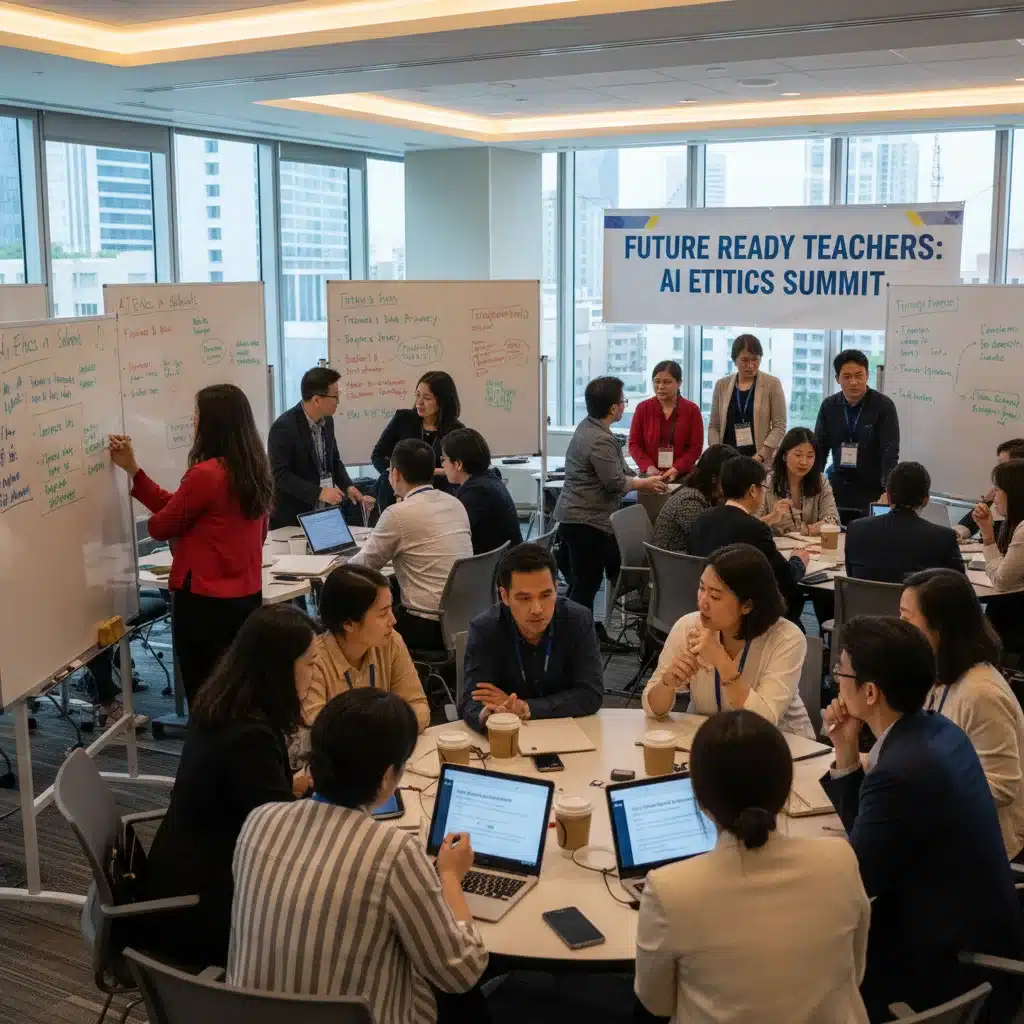
Policy and Governance: Shaping the AI K-12 Curriculum Landscape
The successful integration of AI into K-12 education by 2026 will also heavily depend on proactive policy development at local, state, and federal levels. These policies must address several critical areas:
1. National and State Guidelines for AI in Education
There’s a growing need for clear, comprehensive guidelines from educational authorities on how AI should be used in schools. These guidelines should cover everything from data privacy and security standards to ethical use policies and recommendations for curriculum integration. Uniformity, where appropriate, can help ensure a baseline of quality and safety across districts.
2. Funding for Infrastructure and Training
Implementing AI effectively requires significant investment in technological infrastructure (e.g., reliable internet, devices, secure servers) and ongoing professional development for educators. Policies must allocate dedicated funding to ensure that schools, especially those in underserved communities, have the resources to adopt and leverage AI equitably.
3. Curriculum Frameworks for AI Literacy
Educational policy should support the development of curriculum frameworks that explicitly integrate AI literacy, computational thinking, and data science into various subjects, not just computer science. This ensures that all students, regardless of their chosen academic path, gain foundational knowledge about AI.
4. Vendor Selection and Transparency
With a proliferation of AI educational tools, policies are needed to guide schools in selecting reputable vendors. This includes mandates for transparency regarding how AI algorithms work, how data is collected and used, and the measures taken to prevent bias. Educators need to be part of the evaluation process for these tools.
5. Research and Development
Governments and educational bodies should invest in research on the efficacy of AI in K-12 settings, identifying best practices and potential pitfalls. This research can inform policy adjustments and ensure that AI integration is evidence-based and continuously improved.
Emerging Case Studies and Success Stories in AI K-12 Curriculum
While widespread integration is still underway, several schools and districts are already pioneering the use of AI, offering valuable insights for the broader educational community as we approach 2026. These early adopters demonstrate the tangible benefits of a well-planned AI K-12 curriculum:
Personalized Math Instruction in California
A district in California implemented an AI-powered math platform that adapts to each student’s learning pace and style. Teachers reported significant improvements in student engagement and comprehension, particularly for struggling learners. The AI identified specific areas where students needed extra support, allowing teachers to intervene more effectively and tailor small-group instruction.
AI Literacy Program in Texas
A high school in Texas introduced a dedicated module on AI literacy within its technology curriculum. Students learned about machine learning principles, ethical considerations of AI, and even built simple AI models. This initiative not only boosted students’ technical skills but also fostered a critical understanding of AI’s societal impact, a vital component of the modern AI K-12 curriculum.
Automated Feedback for Writing in Florida
Elementary schools in a Florida county piloted an AI tool that provided instant, constructive feedback on student writing. Teachers noted that students were more motivated to revise their work and showed faster improvement in grammar and sentence structure, freeing up teacher time to focus on higher-order writing skills like argumentation and creativity.
Virtual Science Labs in New York
Amidst resource constraints, a New York school utilized AI-driven virtual reality (VR) labs for science experiments. Students could conduct complex chemical reactions or explore anatomical structures in a safe, immersive environment. This not only expanded access to advanced scientific experiences but also allowed for repeated experimentation and deeper conceptual understanding.
These examples highlight that successful AI integration is not just about technology; it’s about thoughtful pedagogical design, ongoing teacher support, and a clear vision for how AI can enhance learning outcomes within the AI K-12 curriculum. They serve as valuable blueprints for other districts as they prepare for the rapid changes expected by 2026.
Conclusion: Preparing for an AI-Powered K-12 Future by 2026
The integration of AI into the K-12 curriculum is not a distant future but a present reality that will profoundly shape education by 2026. For US educators, this means embracing a mindset of continuous learning, critical evaluation, and proactive adaptation. The goal is to harness AI’s transformative power to create more personalized, engaging, and effective learning environments, while simultaneously preparing students to be ethical, informed, and capable participants in an AI-driven world.
By understanding the core concepts of AI, staying abreast of current trends, addressing challenges head-on, and implementing strategic approaches, educators can ensure that the AI K-12 curriculum empowers all students. The future of education is collaborative, with AI serving as a powerful ally to human educators, enabling them to inspire, challenge, and prepare the next generation for success in an ever-evolving technological landscape.