Breaking Down the Latest Federal Reserve Rate Hike: What 0.25% Means for Your 2026 Mortgage and Investments
Anúncios
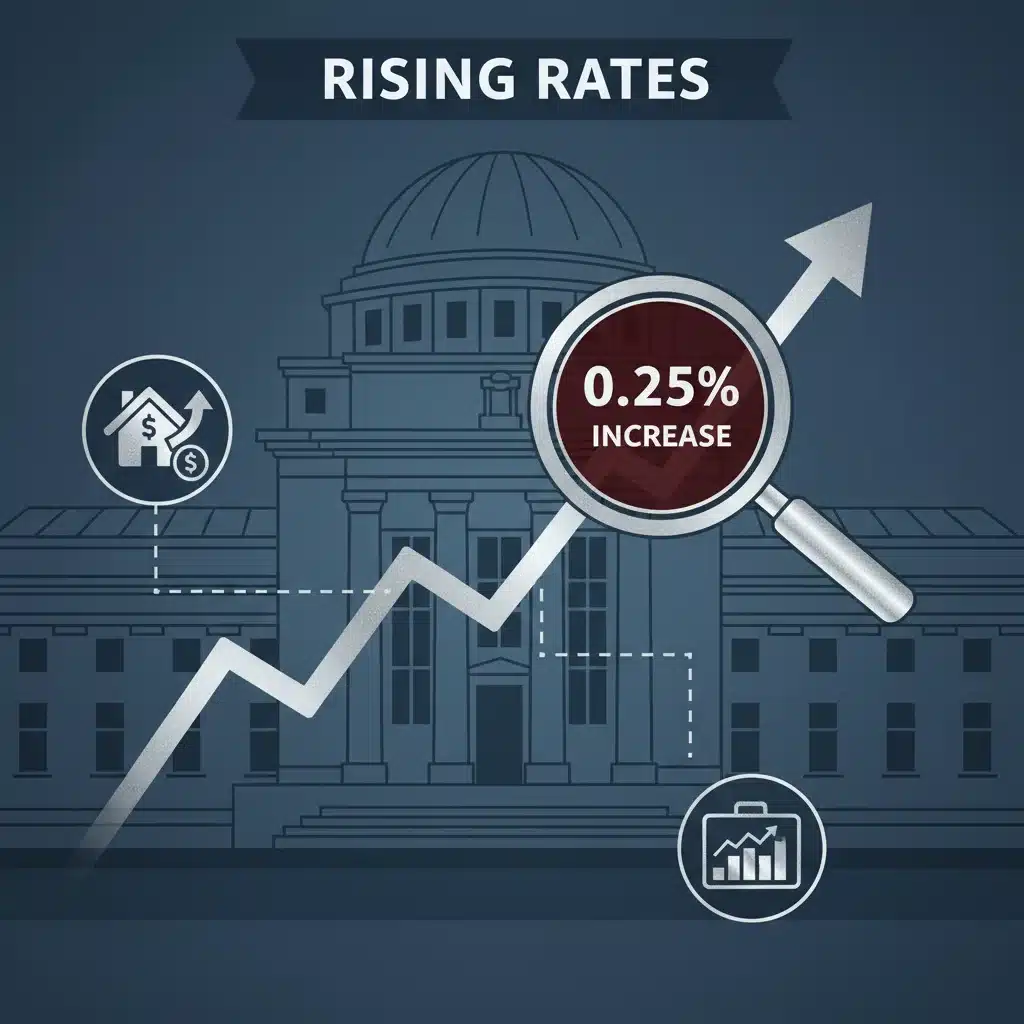
The Federal Reserve, often referred to simply as the Fed, is the central banking system of the United States. Its primary mandate is to maintain maximum employment, stable prices, and moderate long-term interest rates. To achieve these goals, the Fed utilizes various monetary policy tools, with adjusting the federal funds rate being one of the most prominent. Recently, the Fed announced another 0.25% increase to this benchmark interest rate, a move that, while seemingly small, carries significant implications across the entire U.S. economy. Understanding the nuances of this latest Fed Rate Hike is crucial for anyone planning their financial future, especially as we look towards 2026 and beyond. This article will delve deep into what this 0.25% adjustment means for your mortgage, your investments, and your overall financial landscape.
Understanding the Federal Funds Rate and its Ripple Effect
Before we explore the specific impacts, it’s essential to grasp what the federal funds rate truly is and how it influences other interest rates. The federal funds rate is the target rate that commercial banks charge each other for overnight borrowing. While it’s not a rate that consumers directly pay, it serves as a foundational benchmark. When the Federal Reserve increases the federal funds rate, it becomes more expensive for banks to borrow money. These increased costs are then typically passed on to consumers and businesses in the form of higher interest rates for various loans, including mortgages, auto loans, credit cards, and business lines of credit.
The decision to implement a Fed Rate Hike is never taken lightly. It’s usually a response to economic conditions, primarily inflation. When inflation is high, meaning the general price level of goods and services is rising, the Fed often raises interest rates to cool down the economy. Higher borrowing costs discourage spending and investment, thereby reducing demand and, in theory, bringing inflation back down to the Fed’s target of around 2%. Conversely, during economic downturns, the Fed might lower rates to stimulate borrowing and spending, encouraging economic growth.
Anúncios
The recent 0.25% increase signals the Fed’s continued commitment to combating persistent inflationary pressures. While inflation has shown signs of moderating from its peaks, it remains above the Fed’s comfort zone, necessitating further tightening of monetary policy. This latest Fed Rate Hike is part of a broader strategy, and its effects are cumulative, gradually shaping the economic environment for years to come. For individuals and families, this means a recalibration of financial plans, particularly concerning large purchases like homes and strategic investment decisions.
The 0.25% Fed Rate Hike and Your 2026 Mortgage
For most homeowners and prospective buyers, mortgage rates are one of the most tangible impacts of a Fed Rate Hike. While the federal funds rate doesn’t directly dictate mortgage rates, it heavily influences them. Mortgage rates, particularly for fixed-rate mortgages, are more closely tied to the yield on 10-year Treasury bonds, which in turn are influenced by expectations about future inflation and economic growth, both of which the Fed’s actions directly address.
Existing Mortgages: What to Expect
If you currently have a fixed-rate mortgage, a 0.25% Fed Rate Hike will generally not directly affect your current monthly payments. Your interest rate is locked in for the life of the loan. However, if you have an adjustable-rate mortgage (ARM), your interest rate could increase. ARMs typically have an initial fixed-rate period, after which the rate adjusts periodically based on an index plus a margin. Many ARM indices, such as the Secured Overnight Financing Rate (SOFR) or the Constant Maturity Treasury (CMT) index, are sensitive to the Fed’s policy changes. Therefore, if your ARM is due for an adjustment in the coming months or years, you could see an increase in your monthly payments.
For those considering refinancing an existing mortgage, the landscape has become more challenging. Refinancing typically involves securing a new loan at a lower interest rate to reduce monthly payments or tap into home equity. With a higher Fed Rate Hike, new mortgage rates are likely to be elevated compared to the rates available just a year or two ago. This means that for many, refinancing might not offer the significant savings it once did, or it could even result in a higher interest rate than their current loan, making the decision less appealing.
Prospective Homebuyers: Navigating the 2026 Market
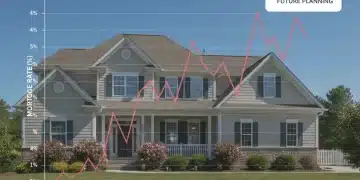
For individuals looking to purchase a home in 2026, the 0.25% Fed Rate Hike, combined with previous increases, means higher borrowing costs. Even a quarter-point increase, when applied to a large sum like a mortgage, can translate into hundreds or even thousands of dollars more over the life of the loan. This directly impacts affordability. A higher interest rate means a larger portion of your monthly payment goes towards interest, reducing your purchasing power for the same monthly outlay.
Let’s consider a hypothetical scenario: A $400,000 30-year fixed-rate mortgage. A 0.25% increase in the interest rate could add approximately $50 to $60 to your monthly payment, depending on the initial rate. While this might seem minor, over 30 years, it accumulates significantly. More importantly, it affects how much house you can afford. Lenders qualify borrowers based on their debt-to-income ratio, and higher interest payments consume a larger portion of your income, potentially pushing you into a lower price bracket or making homeownership less accessible.
The housing market also reacts to these rate changes. Higher mortgage rates tend to cool down demand, which can lead to a moderation in home price growth or even price declines in some areas. For homebuyers in 2026, this could present a mixed bag: while borrowing costs are higher, there might be less competition and more inventory, potentially leading to more negotiating power on the purchase price. However, the overall cost of homeownership will likely remain elevated due to the Fed Rate Hike policies.
Future homebuyers should focus on strengthening their financial position: saving a larger down payment to reduce the loan amount, improving their credit score to qualify for the best possible rates, and meticulously budgeting to understand their true affordability. Exploring different mortgage products, such as shorter-term fixed-rate options or even ARMs if they plan to move within a few years, could also be part of a strategic approach, though ARMs carry their own set of risks in a rising rate environment.
The 0.25% Fed Rate Hike and Your 2026 Investments
The impact of a Fed Rate Hike extends far beyond mortgages, significantly influencing the investment landscape. Investors need to understand how this 0.25% adjustment, and the broader monetary policy stance it represents, will shape their portfolios and opportunities in 2026.
Stocks: Navigating Volatility and Sector Performance
Generally, higher interest rates can be a headwind for the stock market. Here’s why:
- Higher Borrowing Costs for Companies: Businesses often rely on borrowing to fund operations, expansion, and research and development. When interest rates rise, their borrowing costs increase, which can eat into profit margins and reduce earnings. This can make their stocks less attractive to investors.
- Discounting Future Earnings: The valuation of stocks often involves discounting future earnings back to their present value. When the discount rate (which is influenced by prevailing interest rates) is higher, future earnings are worth less today, potentially leading to lower stock valuations.
- Increased Appeal of Fixed-Income: As interest rates rise, bonds and other fixed-income investments offer higher yields, becoming more competitive alternatives to stocks. Some investors may shift capital from stocks to bonds in search of more stable, guaranteed returns.
However, the impact isn’t uniform across all sectors. Some industries are more sensitive to interest rate changes than others:
- Growth Stocks (e.g., Technology): Often hit harder because their valuations are heavily reliant on future earnings potential. Higher discount rates diminish the present value of those distant earnings.
- Financials (e.g., Banks): Can sometimes benefit from a Fed Rate Hike. Banks earn money on the spread between what they pay depositors and what they charge borrowers. Rising rates can increase their net interest margins, potentially boosting profitability.
- Utilities and Consumer Staples: Often considered more defensive sectors. Their earnings are generally more stable, making them potentially more attractive during periods of economic uncertainty and rising rates.
- Real Estate Investment Trusts (REITs): Can face challenges. Higher borrowing costs for property acquisition and development, combined with increased competition from other income-generating assets, can put pressure on REIT performance.
For investors, the 0.25% Fed Rate Hike necessitates a review of portfolio allocations. Diversification remains key, but a strategic tilt towards sectors that are more resilient or even benefit from higher rates might be warranted. Focusing on companies with strong balance sheets, consistent cash flows, and pricing power can help weather potential market volatility.
Bonds and Fixed-Income: A Changing Landscape
The bond market reacts directly and significantly to a Fed Rate Hike. When interest rates rise, the prices of existing bonds typically fall. This is because newly issued bonds offer higher yields, making older, lower-yielding bonds less attractive. Investors holding existing bonds might see a decrease in their bond’s market value if they need to sell before maturity.
However, for investors looking to buy bonds, a rising rate environment presents opportunities. New bonds, certificates of deposit (CDs), and money market accounts will offer more attractive yields. This means that investors can earn more income from their fixed-income holdings. For conservative investors or those approaching retirement, higher bond yields can provide a more substantial and stable income stream, making fixed-income a more appealing component of their portfolio for 2026.
Consider staggering bond maturities (a strategy known as bond laddering) to take advantage of rising rates. As shorter-term bonds mature, the proceeds can be reinvested into new bonds offering higher yields. This approach allows investors to benefit from rate increases over time while maintaining liquidity.
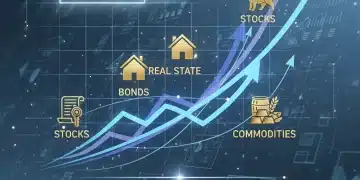
Other Investments: Real Estate, Commodities, and Savings
- Real Estate (beyond your primary residence): Commercial real estate and investment properties are also affected. Higher mortgage rates and borrowing costs for developers can slow down new construction and acquisition. Rental markets might see shifts as homeownership becomes less accessible, potentially increasing demand for rentals in some areas, but overall, the cost of capital for real estate investors rises.
- Commodities: The relationship between interest rates and commodities can be complex. A stronger U.S. dollar, often a consequence of higher interest rates, can make dollar-denominated commodities like oil and gold more expensive for international buyers, potentially dampening demand. However, if the Fed’s actions successfully curb inflation, it could stabilize commodity prices.
- Savings Accounts and CDs: This is one area where consumers directly benefit from a Fed Rate Hike. Banks typically increase the interest rates they offer on savings accounts, money market accounts, and Certificates of Deposit (CDs) in response to a higher federal funds rate. While these increases might not be immediate or perfectly mirrored, savers can expect to earn more on their deposits. This makes saving for short-term goals or building an emergency fund more rewarding.
Strategic Financial Planning for 2026 Amidst a Fed Rate Hike
Given the implications of the 0.25% Fed Rate Hike, proactive financial planning is more important than ever. Here’s how you can adapt your strategy for 2026:
Review Your Budget and Debt
Higher interest rates mean that carrying debt, especially variable-rate debt like credit card balances or lines of credit, becomes more expensive. Prioritize paying down high-interest debt. Review your budget to identify areas where you can cut back to free up funds for debt reduction or increased savings. Every dollar saved on interest payments is a dollar that can be invested or used for other financial goals.
Assess Your Mortgage Situation
If you have an ARM, understand its adjustment schedule and potential future payments. Consider whether refinancing into a fixed-rate mortgage is still a viable option, weighing the current higher rates against the stability of fixed payments. For prospective homebuyers, work with a reputable mortgage broker to explore all options and understand how different rate scenarios could impact your affordability in 2026.
Re-evaluate Your Investment Portfolio
This is not a call to panic, but rather to strategically review. Ensure your asset allocation aligns with your risk tolerance and long-term goals. Consider the potential for continued volatility in the stock market and the increased attractiveness of fixed-income. Diversification across different asset classes, sectors, and geographies remains crucial. Don’t make impulsive decisions; instead, consult with a financial advisor to fine-tune your strategy in light of the current interest rate environment.

For those with a long-term investment horizon, market downturns can present opportunities to buy quality assets at lower prices. A disciplined approach, such as dollar-cost averaging, can help mitigate the risks associated with market timing.
Boost Your Emergency Savings
With interest rates on savings accounts and CDs on the rise, it’s an excellent time to build or bolster your emergency fund. Aim for at least three to six months’ worth of living expenses in an easily accessible, high-yield savings account. This provides a crucial financial safety net against unexpected expenses or economic uncertainties.
Consider Inflation-Protected Securities
While the Fed’s goal is to combat inflation, it’s prudent to consider investments that offer protection against rising prices. Treasury Inflation-Protected Securities (TIPS) are government bonds whose principal value adjusts with inflation, providing a hedge against purchasing power erosion. Other real assets like real estate or certain commodities can also offer some inflation protection, though they come with their own risks.
The Broader Economic Context Towards 2026
The 0.25% Fed Rate Hike is not an isolated event but part of a larger economic narrative. The Fed’s actions reflect its assessment of the economy’s health, particularly concerning inflation and employment. As we move towards 2026, several factors will continue to influence the Fed’s decisions and, consequently, the financial landscape:
- Inflation Trends: The trajectory of inflation will be the primary driver of future Fed policy. If inflation proves more stubborn than anticipated, further rate hikes might be on the table. Conversely, if it cools rapidly, the Fed might pause or even consider rate cuts, though the latter seems less likely in the immediate future.
- Labor Market Strength: A robust job market, characterized by low unemployment and strong wage growth, can contribute to inflationary pressures. The Fed will closely monitor employment data to gauge the economy’s underlying strength.
- Global Economic Conditions: International events, such as geopolitical tensions, supply chain disruptions, and economic performance in major trading partners, can also influence the U.S. economy and the Fed’s policy decisions.
- Consumer Spending and Business Investment: These indicators provide insights into the overall health and momentum of the economy. A significant slowdown in either could prompt a shift in monetary policy.
For individuals, staying informed about these broader economic trends is just as important as understanding the direct impact of a Fed Rate Hike. Economic forecasts and expert analyses can provide valuable context for your personal financial planning.
Conclusion: Adapting to the New Normal of Higher Rates
The latest 0.25% Fed Rate Hike, while a modest adjustment on its own, is a continuation of a significant shift in monetary policy. For your 2026 mortgage and investments, this means adapting to an environment where the cost of borrowing is higher and the returns on savings are more attractive. While this can present challenges for borrowers and some investors, it also creates opportunities for those who plan strategically.
Whether you’re a prospective homebuyer, an existing homeowner with an ARM, or an investor managing a portfolio, the key is to be proactive. Review your financial situation, understand how these changes specifically affect your goals, and consider consulting with financial professionals to tailor a strategy that aligns with your individual circumstances. The economic landscape is dynamic, but with sound planning and informed decisions, you can navigate the impacts of the Fed Rate Hike and position yourself for financial success in 2026 and beyond.