
National Security Brief: The Latest Developments in US Foreign Policy and Their Implications for 2026
As the world continues to navigate a complex tapestry of geopolitical shifts, economic pressures, and technological advancements, understanding the trajectory of US foreign policy 2026 becomes paramount. The decisions made in Washington D.C. reverberate across continents, shaping alliances, influencing economies, and defining the global security landscape. This comprehensive brief delves into the current state of US foreign policy, projecting its likely evolution and the profound implications for the coming year. We will explore key regional focuses, emerging threats, and the strategic adjustments necessary to maintain stability and promote American interests.
Anúncios
The Shifting Sands of Global Power: A Context for US Foreign Policy 2026
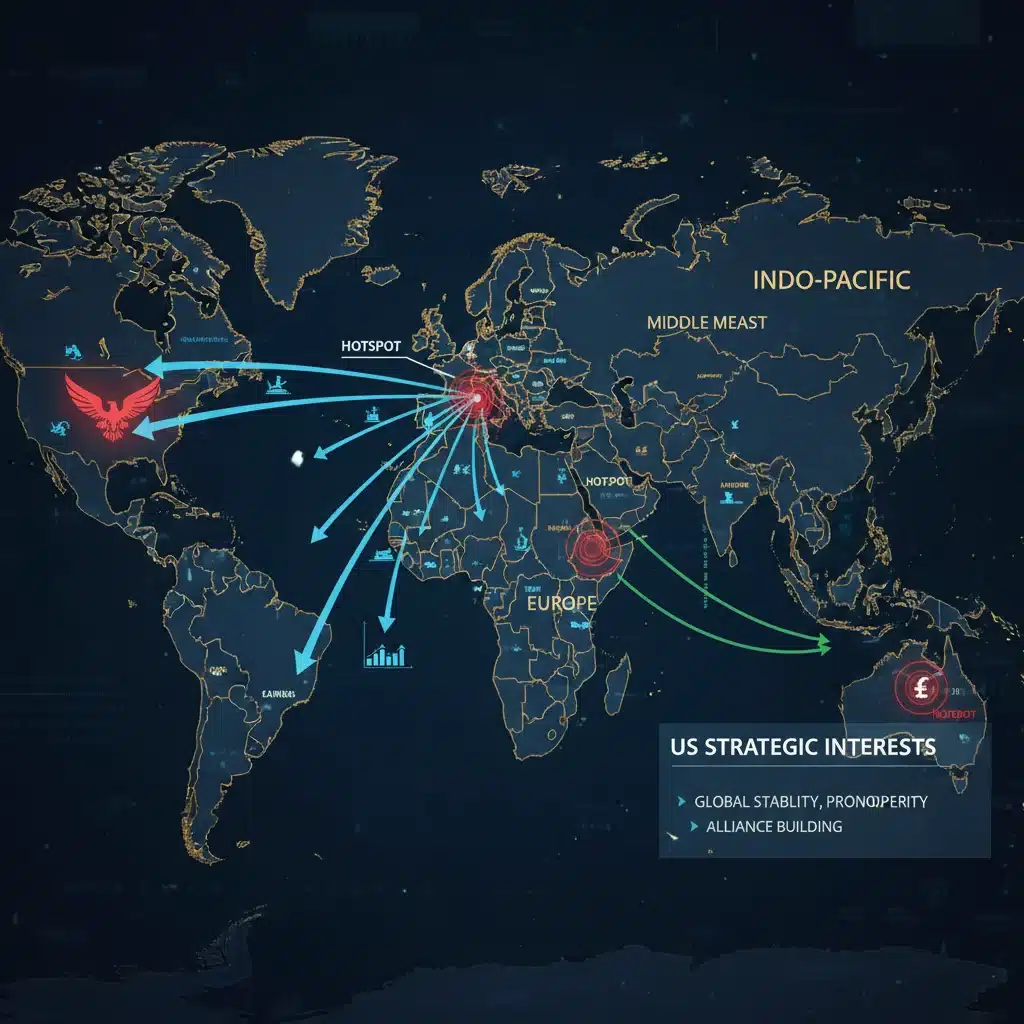
The international system is in a constant state of flux. The rise of new powers, the resurgence of old rivalries, and the proliferation of non-state actors present both challenges and opportunities for US foreign policy 2026. The unipolar moment, characterized by unquestioned American dominance, has long given way to a multipolar or even a ‘multilateral-multipolar’ world. This environment demands a more nuanced and adaptable approach from the United States, moving beyond traditional frameworks to address interconnected global issues. The competition with China, the ongoing conflict in Ukraine, the instability in the Middle East, and the looming threat of climate change are not isolated incidents but rather interconnected facets of a larger geopolitical puzzle that the US must solve.
One of the most significant developments impacting US foreign policy 2026 is the sustained competition with China. This rivalry extends beyond economic and trade disputes to encompass technological supremacy, military modernization, and ideological influence. The Biden administration, and likely any subsequent administration, has framed this relationship as the defining geopolitical challenge of the century. This has led to a strategic pivot towards the Indo-Pacific, strengthening alliances with countries like Japan, South Korea, Australia, and India, and forming new security partnerships such as AUKUS. The goal is not necessarily containment, but rather to create a resilient network of partners that can collectively push back against what the US perceives as China’s coercive practices and expansionist ambitions. This focus will undoubtedly intensify in 2026, with increased diplomatic engagement, military exercises, and technological cooperation aimed at maintaining a free and open Indo-Pacific.
Anúncios
Europe also remains a critical theater for US foreign policy 2026, particularly in the wake of Russia’s full-scale invasion of Ukraine. The conflict has reinvigorated NATO, demonstrating the enduring importance of transatlantic alliances. The US has provided substantial military and financial aid to Ukraine, signaling a commitment to defending democratic values and deterring further Russian aggression. However, the long-term implications of this conflict for European security architecture and US-Russia relations are still unfolding. In 2026, we can expect continued US leadership in supporting Ukraine, while simultaneously working to strengthen NATO’s eastern flank and managing the broader fallout of a fractured European security order. Energy security, refugee crises, and the potential for spillover effects will remain top concerns.
Key Pillars of US Foreign Policy in 2026
Strengthening Alliances and Partnerships
A cornerstone of US foreign policy 2026 will be the continued emphasis on alliances and partnerships. Recognizing that no single nation can tackle global challenges alone, the US has sought to revitalize existing alliances and forge new ones. This strategy is evident in the Indo-Pacific, where the Quad (US, Japan, India, Australia) and AUKUS (Australia, UK, US) serve as crucial security frameworks. In Europe, NATO has proven its enduring relevance, and the US will continue to invest in its collective defense capabilities. Beyond traditional military alliances, the US is also focusing on partnerships to address shared economic, technological, and environmental concerns. This includes working with G7 and G20 nations on global economic stability, supply chain resilience, and climate action. The effectiveness of US foreign policy 2026 will largely depend on its ability to leverage these networks for collective security and prosperity.
Economic Statecraft and Technological Competition
Economic power and technological leadership are increasingly intertwined with national security. US foreign policy 2026 will continue to employ economic statecraft as a tool to advance its interests and counter adversaries. This involves strategic investments, sanctions, export controls, and trade agreements. The competition for technological supremacy, particularly in areas like artificial intelligence, quantum computing, semiconductors, and biotechnology, is a central feature of this approach. The US aims to maintain its technological edge while preventing adversaries from acquiring critical technologies that could undermine its security. This will involve domestic investment in R&D, fostering innovation, and collaborating with allies to establish secure supply chains and common standards. The CHIPS and Science Act, for example, is a testament to this strategic focus, aiming to bolster domestic semiconductor manufacturing and research, thereby reducing reliance on foreign supply chains. This focus on economic and technological resilience will be a defining characteristic of US foreign policy 2026.
Addressing Transnational Threats
Beyond traditional state-on-state competition, US foreign policy 2026 must contend with a range of transnational threats that do not respect national borders. These include terrorism, cyber warfare, climate change, pandemics, and the proliferation of weapons of mass destruction. While the immediate focus might be on great power competition, these threats pose significant long-term risks to global stability and human security. The US will continue to lead international efforts to combat terrorism, sharing intelligence and coordinating counter-terrorism operations. Cyber security will remain a top priority, with increased investment in defensive capabilities and efforts to establish international norms for responsible state behavior in cyberspace. Climate change, too, demands a robust diplomatic response, with the US working to reduce emissions, promote renewable energy, and assist vulnerable nations in adapting to its impacts. The lessons learned from the COVID-19 pandemic will inform future health security initiatives, emphasizing global cooperation on disease surveillance and vaccine development. These multifaceted challenges require a comprehensive and collaborative approach, underscoring the interconnectedness of US foreign policy 2026 with global well-being.

Regional Outlook for US Foreign Policy 2026
Indo-Pacific: The Epicenter of Geopolitical Competition
As mentioned, the Indo-Pacific will remain the primary theater for US foreign policy 2026. The region’s economic dynamism, strategic waterways, and the presence of both established and rising powers make it critical for global stability. The US strategy will likely focus on:
- Deterring Aggression: Strengthening military presence and capabilities in the region, conducting joint exercises with allies, and ensuring freedom of navigation.
- Economic Engagement: Promoting open trade, resilient supply chains, and investment in infrastructure through initiatives like the Indo-Pacific Economic Framework for Prosperity (IPEF).
- Diplomatic Outreach: Deepening bilateral and multilateral ties with regional partners, including ASEAN nations, to build a collective approach to regional security challenges.
- Taiwan Strait Stability: Maintaining a delicate balance between strategic ambiguity and strong support for Taiwan’s self-defense capabilities, aiming to prevent any unilateral change to the status quo.
The success of US foreign policy 2026 in this region will be crucial in shaping the future global order.
Europe: Reaffirming Transatlantic Bonds Amidst Conflict
While the Indo-Pacific garners significant attention, Europe’s strategic importance has been reaffirmed by the conflict in Ukraine. US foreign policy 2026 in Europe will prioritize:
- Sustained Support for Ukraine: Continuing military, economic, and humanitarian aid to ensure Ukraine’s ability to defend itself and rebuild.
- Strengthening NATO: Enhancing deterrence and defense capabilities, particularly on the eastern flank, and integrating new members like Finland and Sweden.
- Energy Security: Working with European partners to reduce reliance on Russian energy and diversify supply chains, promoting renewable energy solutions.
- Countering Russian Influence: Implementing sanctions, combating disinformation, and supporting democratic institutions in countries vulnerable to Russian coercion.
The long-term stability of Europe and the strength of the transatlantic alliance are vital components of overall US foreign policy 2026.
Middle East: Balancing Interests and Managing Instability
The Middle East continues to present a complex array of challenges for US foreign policy 2026. While the US has sought to rebalance its focus away from large-scale military interventions, the region’s volatility demands ongoing attention. Key priorities will likely include:
- Counter-Terrorism: Continuing efforts to degrade terrorist organizations like ISIS and Al-Qaeda, both directly and through partner forces.
- Iran Nuclear Deal: Navigating the complexities of Iran’s nuclear program and regional destabilizing activities, whether through diplomacy or deterrence.
- Regional Stability: Supporting diplomatic efforts to de-escalate tensions, particularly between Saudi Arabia and Iran, and promoting peaceful resolutions to ongoing conflicts.
- Energy Flows: Ensuring the stable flow of oil and gas from the region to global markets, a critical factor for the world economy.
The approach to the Middle East in 2026 will likely be characterized by a mix of strategic engagement and a cautious re-evaluation of long-term commitments, aiming to protect US interests without getting embroiled in protracted conflicts.
Africa and Latin America: Growing Strategic Importance
While often overshadowed by other regions, Africa and Latin America are gaining increasing strategic importance for US foreign policy 2026. China’s growing influence in both regions, coupled with internal challenges like democratic backsliding, economic instability, and climate vulnerability, necessitates renewed US engagement.
- Africa: The US will likely focus on promoting sustainable development, strengthening democratic institutions, combating terrorism, and countering the influence of rival powers through targeted investments and diplomatic initiatives.
- Latin America: Priorities will include addressing migration challenges, combating drug trafficking, promoting economic growth, and supporting democratic governance, while also responding to humanitarian crises and fostering regional stability.
These regions offer significant opportunities for partnership and growth, and a proactive US foreign policy 2026 will seek to deepen these relationships.
Emerging Challenges and Future Trajectories for US Foreign Policy 2026
Beyond the regional dynamics, several overarching challenges will shape the future trajectory of US foreign policy 2026. The rapid pace of technological change, particularly in artificial intelligence and cybersecurity, presents both incredible opportunities and significant risks. The ethical implications of AI, the potential for autonomous weapons systems, and the ever-present threat of cyberattacks from state and non-state actors will require constant vigilance and adaptation. The US will need to lead in establishing international norms and regulations in these nascent fields to prevent destabilizing arms races and protect critical infrastructure.
Furthermore, the domestic political landscape in the United States will inevitably influence US foreign policy 2026. A deeply polarized political environment can lead to inconsistent policies, undermine international credibility, and make it challenging to forge consensus on critical foreign policy issues. The outcome of future elections, shifts in public opinion, and the evolving priorities of Congress will all play a role in defining America’s approach to the world. A strong and coherent domestic foundation is essential for an effective foreign policy.
The global economic outlook also holds significant sway. Inflationary pressures, potential recessions in major economies, and ongoing supply chain disruptions could strain international cooperation and exacerbate existing tensions. US foreign policy 2026 will need to navigate these economic headwinds, working with allies to promote growth, alleviate poverty, and build more resilient global financial systems. Economic stability is a prerequisite for political stability, and the US has a vested interest in fostering a healthy global economy.
The Role of Multilateralism in US Foreign Policy 2026
Despite the emphasis on great power competition, multilateralism will remain a crucial tool for US foreign policy 2026. International institutions like the United Nations, the World Trade Organization, the International Monetary Fund, and the World Health Organization, while imperfect, provide essential platforms for cooperation on shared challenges. The US will likely continue to engage with these bodies, pushing for reforms where necessary, but recognizing their indispensable role in addressing issues like climate change, global health, humanitarian crises, and arms control. Effective multilateral diplomacy can amplify American influence and distribute the burden of global problem-solving.
Human Rights and Democratic Values
Finally, the promotion of human rights and democratic values remains a core, albeit often challenging, aspect of US foreign policy 2026. While realpolitik often dictates pragmatic engagement with authoritarian regimes, the US has historically championed democracy and human rights abroad. In 2026, this will likely involve continued support for civil society organizations, independent media, and democratic movements worldwide. The challenge lies in balancing these ideals with other strategic interests, particularly in regions where geopolitical competition is intense. The credibility of US leadership on these issues is vital for its soft power and its ability to inspire global cooperation.
Conclusion: Navigating a Complex World with US Foreign Policy 2026
The year 2026 promises to be another period of significant challenges and strategic recalibrations for US foreign policy. From the intensifying competition in the Indo-Pacific to the ongoing conflict in Europe, and the persistent instability in the Middle East, the United States will be called upon to demonstrate leadership, adaptability, and resilience. By strengthening alliances, leveraging economic and technological prowess, addressing transnational threats, and engaging strategically across all regions, the US aims to secure its national interests and promote a more stable, prosperous, and democratic world.
The effectiveness of US foreign policy 2026 will hinge on a coherent strategy that integrates diplomatic, economic, military, and informational tools. It will require a delicate balance between competition and cooperation, between defending core values and pursuing pragmatic interests. As the global landscape continues to evolve at an unprecedented pace, constant vigilance, strategic foresight, and a willingness to adapt will be the hallmarks of a successful American engagement with the world. The implications of these developments are far-reaching, affecting not just the United States but every corner of our interconnected planet.